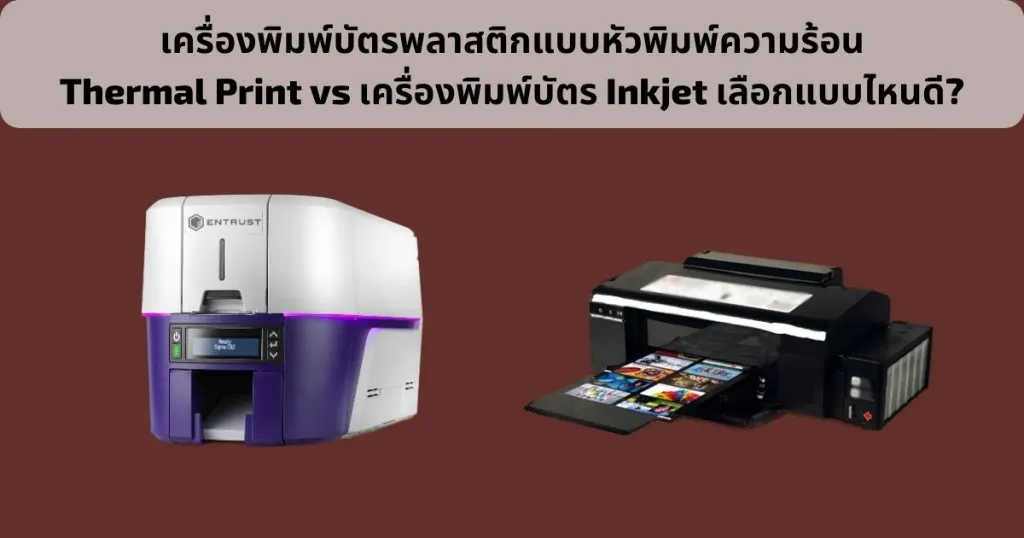
When selecting hardware to print employee badges, student IDs, membership credentials, and visitor passes, decision-makers typically encounter two competing technologies: dedicated Thermal Transfer / Dye-Sublimation Card Printers and consumer Inkjet Printers modified with plastic card trays. Understanding their mechanical differences, print durability, and total cost of ownership is essential for choosing the optimal solution for your enterprise.
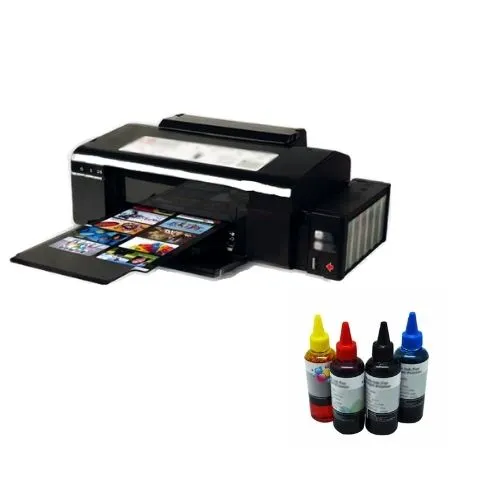
Inkjet printers spray microscopic liquid ink droplets onto paper surfaces where ink readily absorbs into porous fibers. To print PVC cards, third-party vendors adapt these desktop paper printers with custom plastic trays holding one or two cards at a time.
Pros: Low initial hardware purchase price and widespread availability of aftermarket refill inks.
Cons: Non-porous PVC plastic cannot absorb liquid ink; the ink simply dries on the surface, leaving it highly vulnerable to smearing, water damage, and scratching unless manually laminated in a separate step. Furthermore, manufacturers do not design paper sheet feeders for rigid cards, leading to frequent mechanical roller jams and immediately voiding the manufacturer's warranty. Continuous batch printing is impossible, restricting output to small, labor-intensive manual runs.
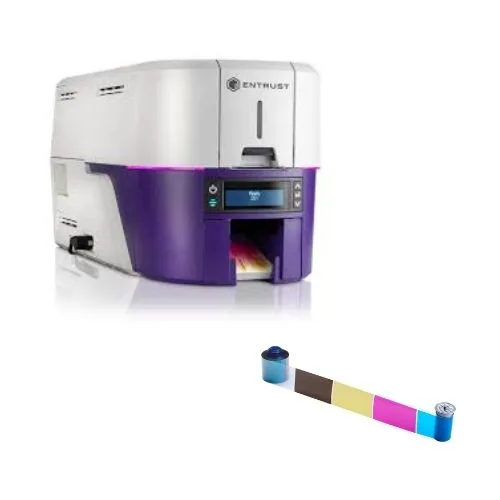
Dedicated plastic card printers are engineered specifically for rigid PVC card handling. Utilizing a high-precision thermal printhead, the printer applies precise heat to vaporize solid dye pigments from color ribbons (Yellow, Magenta, Cyan, Black, and Topcoat - YMCKT) directly into the plastic surface.
Pros: Flawless, edge-to-edge photo reproduction with an integrated clear Topcoat protective layer applied in the same pass. Badges resist fading, abrasion, and moisture for years. Thermal printers feature automatic dual-sided card flipping, automated hoppers holding hundreds of cards for high-speed continuous runs, and optional encoders for magnetic stripes and contact/contactless smart chips.
Cons: Higher initial investment compared to desktop paper printers. However, their industrial reliability, standardized warranties, and low per-card operational costs deliver far superior long-term ROI.
For professional institutions requiring crisp typography, durable security credentials, and uninterrupted operations, dedicated thermal card printers remain the gold standard.
