
As physical security requirements intensify across commercial and industrial facilities, biometric Access Control technologies have evolved beyond traditional RFID key cards and fingerprint sensors. Today, AI-powered Facial Recognition represents the pinnacle of speed, convenience, and non-intrusive security, delivering robust verification across corporate headquarters, manufacturing complexes, data centers, and airport terminals.
How Biometric Facial Recognition Works
Advanced facial recognition terminals utilize dual high-definition optical and infrared (IR) cameras to capture multi-dimensional facial contours as individuals approach the entryway. Sophisticated deep-learning algorithms extract distinctive biological landmarks—such as the relative distance between pupils, nasal bridge height, jawline contours, and forehead breadth—generating an encrypted biometric template.
This template is compared against the authorized database within a fraction of a second (under 0.3 seconds). The system incorporates anti-spoofing liveness detection to prevent unauthorized bypasses using printed photographs, digital video replays, or 3D masks. Environmental adaptability features ensure seamless recognition under varying lighting conditions, from bright sunlight to pitch-black hallways.
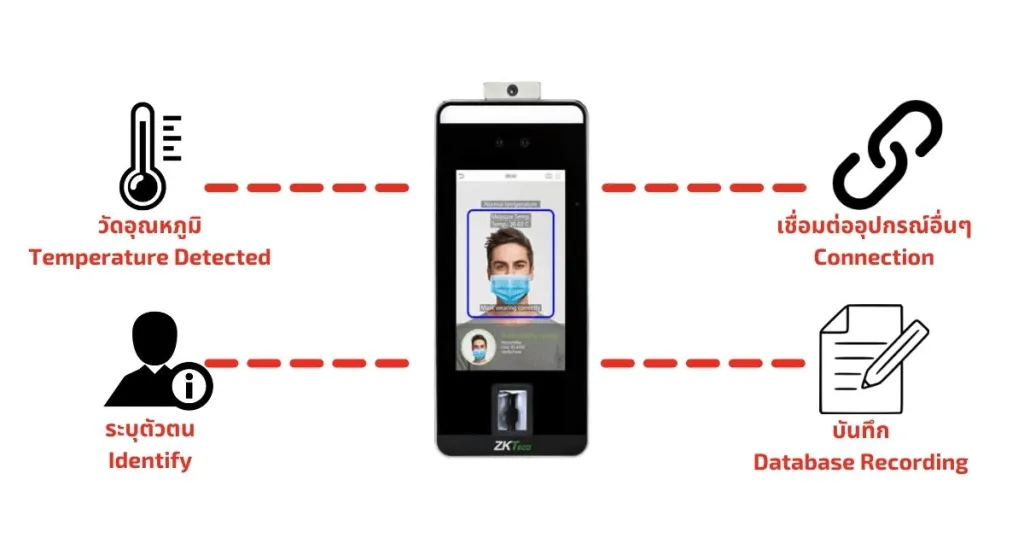
When integrated with enterprise access control infrastructure, facial recognition terminals act as intelligent controllers commanding physical barriers. Upon successful authentication, the terminal triggers relay outputs to disengage electromagnetic door locks (Maglocks), electric strikes, or motor-driven pedestrian flap gates.
If an unrecognized face is detected or an access schedule violation occurs, the system maintains door lock integrity, logs an event snapshot, and triggers real-time alerts to the central security management console. Touchless facial verification eliminates bottlenecks, prevents proxy credential sharing, and guarantees hygienic, hands-free entry for all authorized personnel.
