
Selecting the ideal card printer requires understanding its technical specifications. Comparing equipment datasheets without clear criteria often leads to purchasing unnecessary features or acquiring hardware that fails to meet daily operational demands. Here is a comprehensive breakdown of essential technical parameters to guide your procurement decisions:
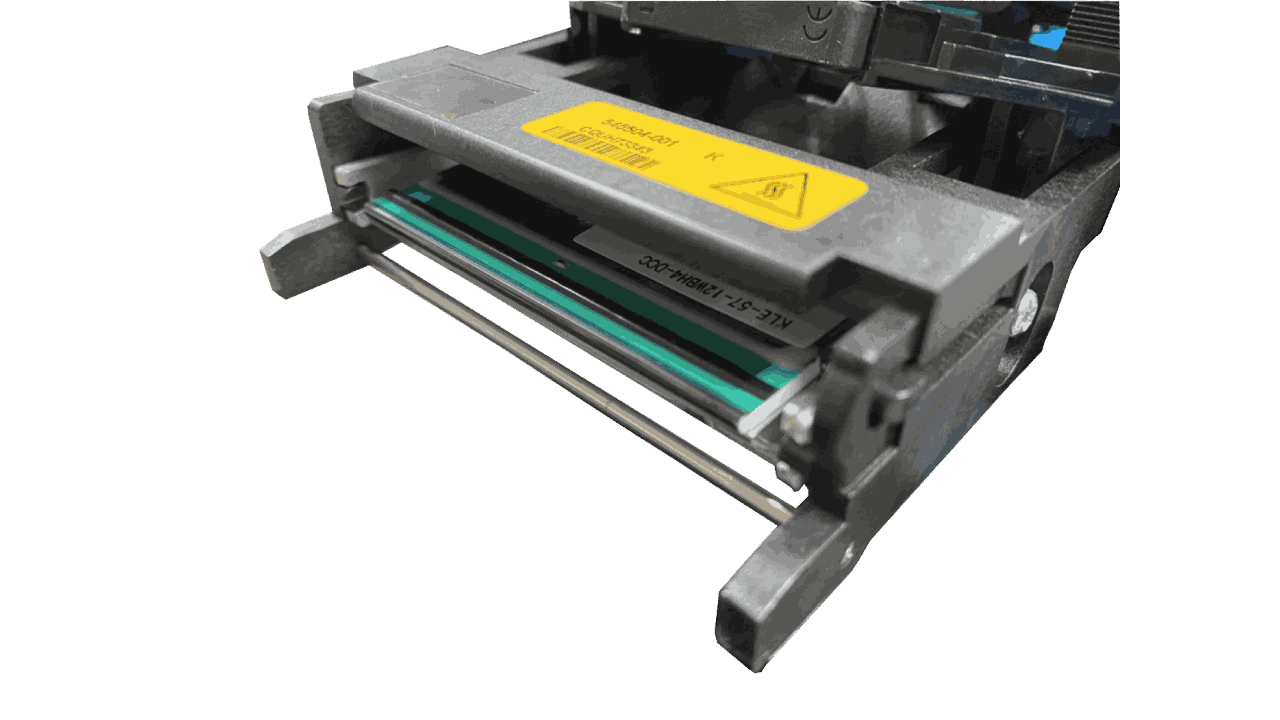
• Dye-Sublimation (Direct-to-Card / DTC): The thermal printhead applies heat directly to ribbon panels, infusing colors (YMCKT) into the card surface. Economical and fast, DTC leaves a fine 0.5 mm unprinted white border around card edges.
• Reverse Retransfer Technology: Prints images in reverse onto a transparent transfer film, then thermally bonds the film onto the card. Delivers true edge-to-edge (over-the-edge) coverage, richer tones, and safe printing on uneven smart cards with embedded chips.
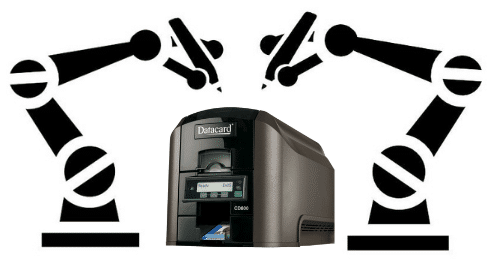
Standard entry-level printers process one card side at a time (Simplex). Outfitting printers with an automatic dual-sided card flipper module (Duplex) allows seamless two-sided printing—full color on front, black text and barcodes on back—without manual card handling.
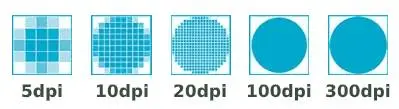
Standard enterprise printers operate at 300 dpi, delivering crisp portraits and legible 6-point typography on standard CR-80 cards. High-security applications (driver licenses, national citizen IDs) utilize 600 dpi engines for microtext security patterns and intricate guilloche line work.
Speed varies by ribbon type: full-color YMCKT printing typically achieves 180 to 250 cards per hour, whereas monochrome black resin (K) printing reaches 600 to 1,000 cards per hour, making monochrome ideal for high-volume student test badges and visitor passes.
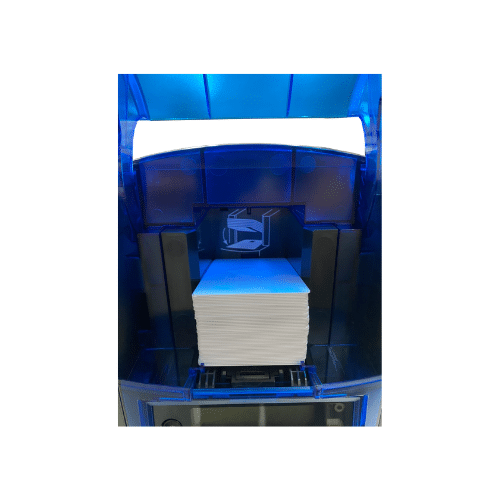
For large batch issuances, select models with 100- to 200-card input hoppers and multi-compartment feeding modules supporting diverse card pre-prints simultaneously.
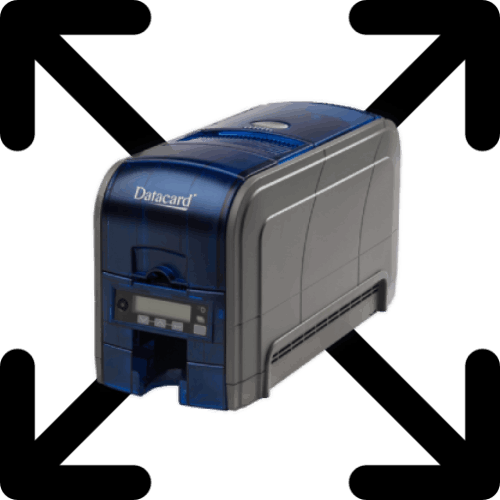
Desktop card printers feature ergonomic, space-saving footprints engineered to fit neatly into office workstations, bank teller desks, and registration counters.
Discover TOPPAN EDGE's comprehensive range of certified plastic card printers tailored to your specific organizational scale.
